hermes
1f0201a80f
hermes
1f0201a80f
- 3-layer architecture: raw (monthly buckets) → wiki (domain subdirs) → SCHEMA
- Privacy: repo set to private (public-safe content only)
- Sync: daily Links App sync via raw/links/YYYY-MM/
- Design: converged via Grok 4.5 2-round review
3.5 KiB
title, created, updated, type, tags, external
| title | created | updated | type | tags | external | ||
|---|---|---|---|---|---|---|---|
| Microservice | 2019-12-03 | 2019-12-03 | summary |
|
https://github.com/wahyd4/knowledge/blob/master/categories/microservice.md |
Microservice
-
benefits
- Each application is relatively small
- Easy to scale
- Improved fault isolation
- One service fails won’t influence others
- You can use different stack for each service
- Each service can be deployed independently
-
drawbacks
- Increased memory consumption
- Developers must deal with extra complexity of creating a distributed system
- Deployment complexity
- To deploy different types of services
Service Mesh
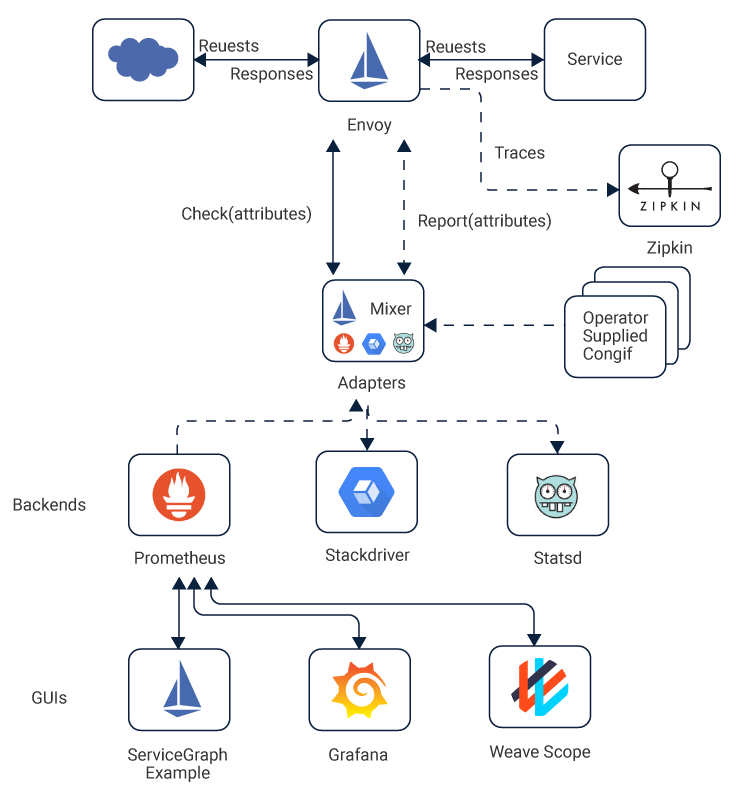
The term service mesh is used to describe the network of microservices that make up such applications and the interactions between them. As a service mesh grows in size and complexity, it can become harder to understand and manage. Its requirements can include discovery, load balancing, failure recovery, metrics, and monitoring. A service mesh also often has more complex operational requirements, like A/B testing, canary rollouts, rate limiting, access control, and end-to-end authentication.
Opensource Projects
CircuitBreaker Design
Why we need CircuitBreaker
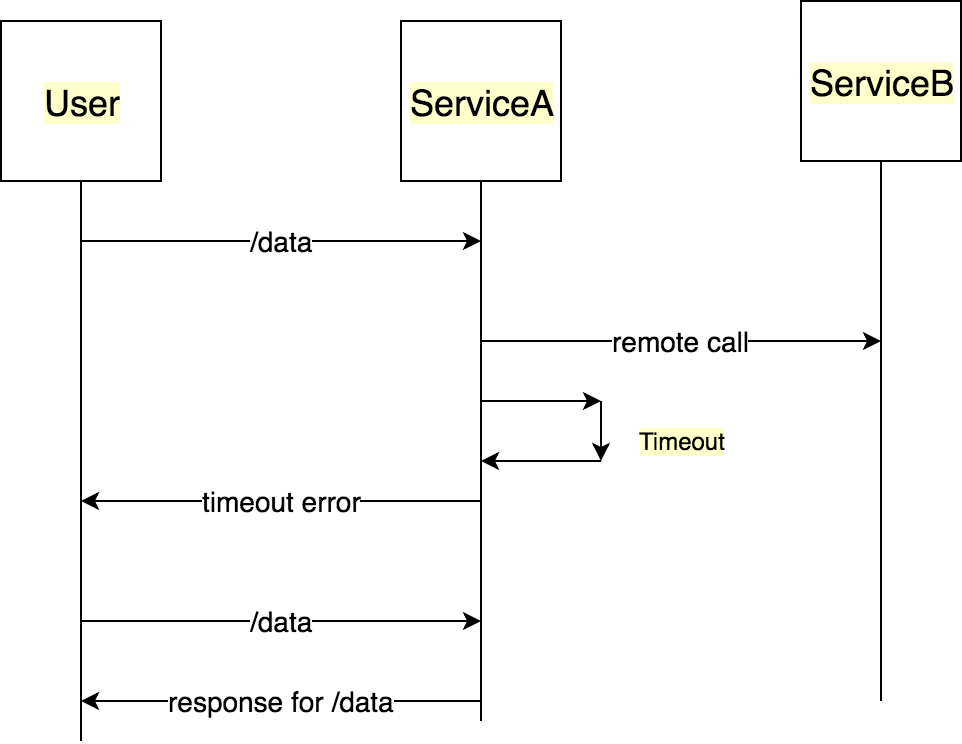
In case we have serviceB down, serviceA should still try to recover from this and try to do one of the followings:
- Custom fallback: Try to get the same data from some other source. If not possible, use its own cache value.
- Fail fast: If serviceA knows that serviceB is down, there is no point waiting for the timeout and consuming its own resources. It should return ASAP “knowing” that serviceB is down
- Don’t crash: As we saw in this case, serviceA should not have crashed.
- Heal automatic: Periodically check if serviceB is working again.
- Other APIs should work: All other APIs should continue to work.
What is circuit breaker design?
The idea behind is simple:
- Once serviceA “knows” that serviceB is down, there is no need to make request to serviceB. serviceA should return cached data or timeout error as soon as it can. This is the OPEN state of the circuit
- Once serviceA “knows” that serviceB is up, we can CLOSE the circuit so that request can be made to serviceB again.
- Periodically make fresh calls to serviceB to see if it is successfully returning the result. This state is HALF-OPEN.
More links
- https://martinfowler.com/bliki/CircuitBreaker.html
- https://itnext.io/understand-circuitbreaker-design-pattern-with-simple-practical-example-92a752615b42
Self-contained System (SCS)
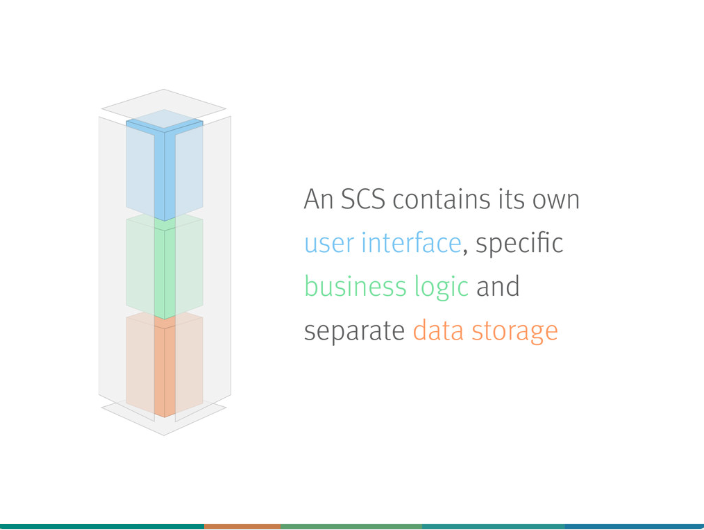
The Self-contained System (SCS) approach is an architecture that focuses on a separation of the functionality into many independent systems, making the complete logical system a collaboration of many smaller software systems. This avoids the problem of large monoliths that grow constantly and eventually become unmaintainable. Over the past few years, we have seen its benefits in many mid-sized and large-scale projects.
The idea is to break a large system apart into several smaller self-contained systems, or SCSs, that follow certain rules.