
4.3 KiB
HTTP
HTTP Status code
200OK201created204No content, The server has successfully fulfilled the request and that there is no additional content to send in the response payload body.301Moved Permanently400Bad request, the request body syntactically wrong401Unauthorized, generally means you didn't login or specify the credential403Forbidden, we know who you are, but you just don't have enough rights415Unsupported Media Type,the content type consumer passed in is not valid422Unprocessable Entity, means the request body is syntactically correct but semantically incorrect500Internal error, some unknown or unhandled error happened from the server side502Bad Gateway, The server, while acting as a gateway or proxy, received an invalid response from an inbound server it accessed while attempting to fulfill the request.503Service Unavailable, The server is currently unable to handle the request due to a temporary overload or scheduled maintenance, which will likely be alleviated after some delay.504Gateway timeout, The server, while acting as a gateway or proxy, did not receive a timely response from an upstream server it needed to access in order to complete the request.
HTTP 2
HTTP server push
HTTP/2 Push allows a web server to send resources to a web browser before the browser gets to request them. It is, for the most part, a performance technique that can help some websites load faster.
HTTP/2 Push is not a mechanism for the server to notify things to the browser. Instead, pushed contents are used by the browser when it may have otherwise produced a request to get the resource anyway. But if the browser does not request the resource, the pushed contents become wasted bandwidth.
Server push some related resource before the browser sends the request. .e.g. Browser request index.html, and then server response with index.html and also take the initiative to push style.css and index.js to frontend.
Frames:
- HEADERS
- PUSH_PROMISE
- DATA
- RST_STREAM
HTTP server-sent events
Links
CSS3
- transition
- transaction
- border-radius
- rgba
- flex
- box-shadow
- svg
CORS
- Nginx proxy
- Server add headers
CDN
- Reduce request amount
- Reduce server network traffic
- Speed up load
Websocket
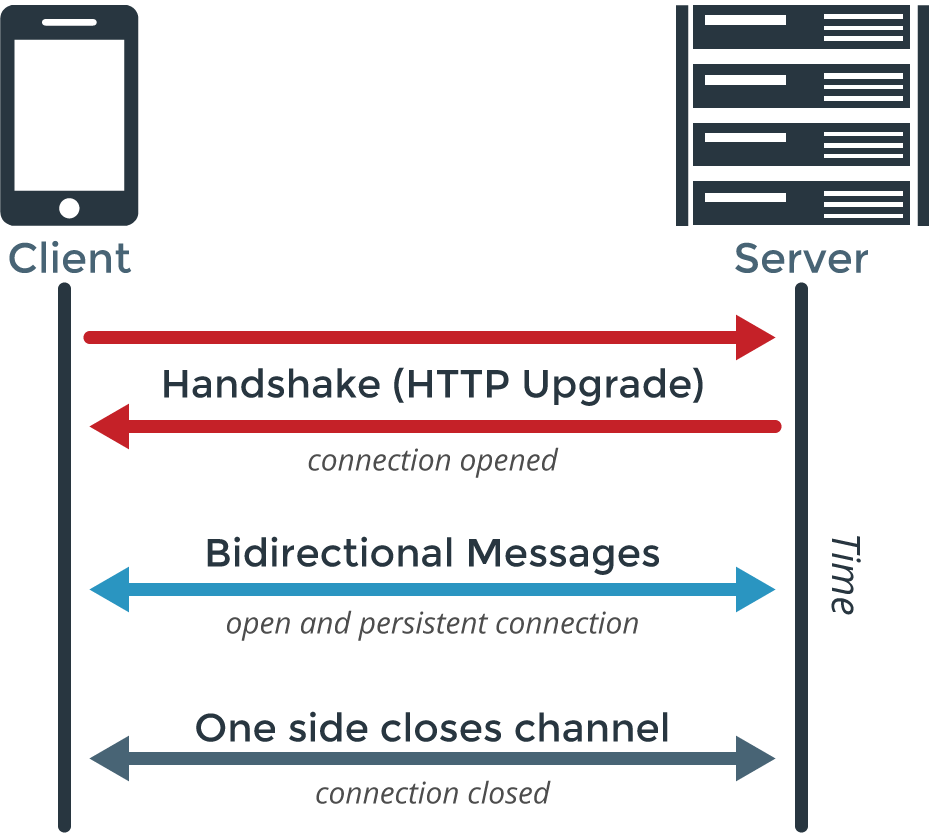
WebSocket is a computer communications protocol, providing full-duplex communication channels over a single TCP connection. The WebSocket protocol was standardized by the IETF as RFC 6455 in 2011, and the WebSocket API in Web IDL is being standardized by the W3C. WebSocket is a different TCP protocol from HTTP.
Frameworks and tools
- Pusher
- Socket.IO
- Pubnub
How Websocket works
json-schema
- Describe data format
- Clear, machine and human readable
- Complete structure validation
Auth Related
- session
- store session_id in cookie, server side has a map in memory
- JWT Token
- expire
- cookie
- local storage
Browser
How browser works?
How browser render web page
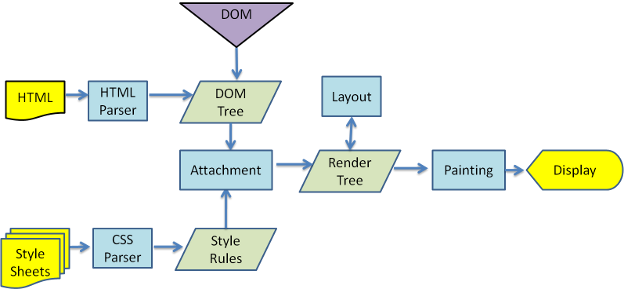
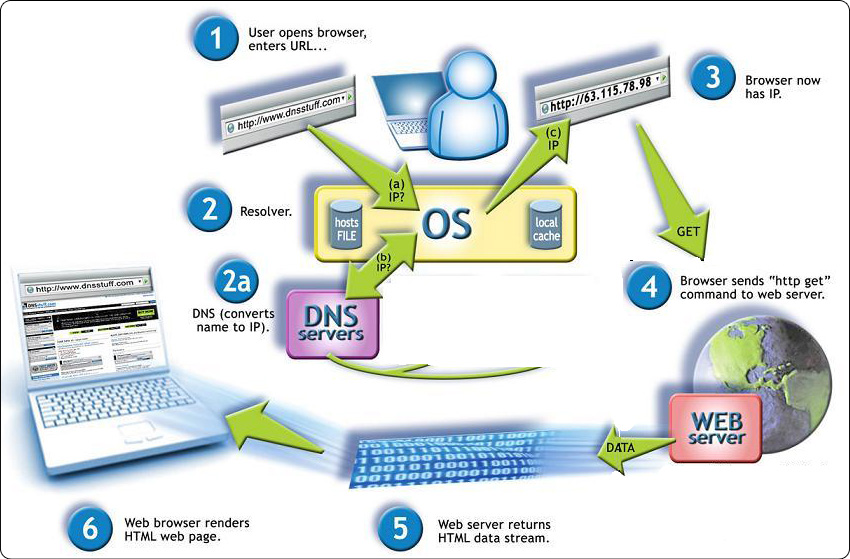
The flow diagram when you access a website
CSS
tips
- inline element can’t set width, modify the display to inline-block
inline element
* i
* span
* a
* image
* label
* input
* button
* textarea
* br
CSS custom properties(variables)
# global variable
:root {
  font-size: 16px;
}
element {
  --main-bg-color: brown;
}
Then you use it like:
  element {
    background-color: var(--main-bg-color);
  }
Some advanced usage, you can have default value when variable is not set
.two {
  color: var(--my-var, red); /* Red if --my-var is not defined */
}

.three {
  background-color: var(--my-var, var(--my-background, pink)); /* pink if my-var and --my-background are not defined */
}

.three {
  background-color: var(--my-var, --my-background, pink); /* Invalid: "--my-background, pink" */
}