mirror of
https://github.com/wahyd4/one-knowledge.git
synced 2026-08-09 05:06:40 +10:00

242 lines
7.4 KiB
Markdown
242 lines
7.4 KiB
Markdown
---
|
||
title: Java
|
||
created: 2020-04-08
|
||
updated: 2020-04-08
|
||
type: summary
|
||
tags: [tech, reference]
|
||
external: https://github.com/wahyd4/knowledge/blob/master/categories/java.md
|
||
---
|
||
|
||
## Java GC
|
||
|
||
### GC types
|
||
|
||
- Serial GC
|
||
- Parallel GC
|
||
- CMS GC
|
||
- G1 GC
|
||
|
||
### Object type
|
||
|
||
- Young generation minor GC
|
||
- Old generation full GC
|
||
- System.gc()
|
||
|
||
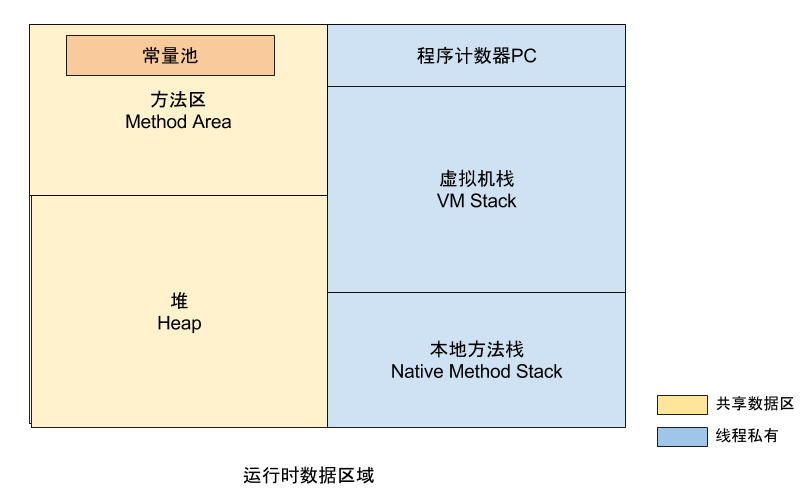
## JVM
|
||
|
||
- Method Area
|
||
- Class name, Constant, static Constant, Class object
|
||
- Heap
|
||
- Object instance, array
|
||
|
||
- young generation
|
||
|
||
- Old generation
|
||
- VM stack
|
||
- local variable
|
||
- dynamic links
|
||
- operation stacks
|
||
- Native method stack
|
||
- program counter
|
||
|
||
### JVM insight
|
||
|
||
## Spring
|
||
- Spring boot
|
||
- Rest controller
|
||
- Jpa template
|
||
- Spring scheduler
|
||
- Annotation bean
|
||
- Spring cloud
|
||
- Consol
|
||
- Zuul
|
||
- Cloud config
|
||
- Spring cloud zookeeper( discovery and configuration)
|
||
- Spring ecurity
|
||
|
||
## ORM
|
||
- Hibernate
|
||
- validation
|
||
- JPA
|
||
- Sprint jpa tempalte
|
||
- Mybatis
|
||
|
||
## Build
|
||
- Gradle
|
||
- groovy task
|
||
- Maven
|
||
- XML plugins
|
||
- Maven mirror
|
||
|
||
- [https://maven-central.storage.googleapis.com](https://maven-central.storage.googleapis.com)
|
||
|
||
- [http://maven.aliyun.com/nexus/content/groups/public/](http://maven.aliyun.com/nexus/content/groups/public/)
|
||
- Ant
|
||
- task based
|
||
|
||
## Composition or inheritance
|
||
|
||
Think of containment as a has a relationship. A car "has an" engine, a person "has a" name, etc.
|
||
|
||
Think of inheritance as an is a relationship. A car "is a" vehicle, a person "is a" mammal, etc.
|
||
|
||
## Useful tips
|
||
|
||
### Iterate map
|
||
- for (Map.Entry<String, String> entry : map.entrySet()) { }
|
||
### List to array
|
||
- int[] arr= new int[list.length](); list.toArray(arr);
|
||
### Object
|
||
- immutable
|
||
- object that can’t be modified after it’s created
|
||
- Don’t allow subclass override methods, class to be final
|
||
- Don’t provide setter method
|
||
- Make all field private and final
|
||
- mutable
|
||
### Default Timezone
|
||
- TimeZone.setDefault(TimeZone.getTimeZone("GMT+8"))
|
||
### [generics](https://appliedgo.net/generics/)
|
||
- Why we need?
|
||
|
||
- e.g we have sort method, and different type(n) of objects. then you have to write n kind of search methods.
|
||
### event listener
|
||
- [https://stackoverflow.com/questions/6270132/create-a-custom-event-in-java](https://stackoverflow.com/questions/6270132/create-a-custom-event-in-java)
|
||
|
||
### Try with resource
|
||
The try-with-resources statement is a try statement that declares one or more resources. A resource is an object that must be closed after the program is finished with it. The try-with-resources statement ensures that each resource is closed at the end of the statement. Any object that implements java.lang.AutoCloseable, which includes all objects which implement java.io.Closeable, can be used as a resource.
|
||
|
||
In short no need add manual `finally` block to close resources.
|
||
|
||
```java
|
||
try (InputStream caInput = new ByteArrayInputStream(decode)) {
|
||
// Generate the CA Certificate from the raw resource file
|
||
|
||
Certificate ca = CertificateFactory.getInstance("X.509").generateCertificate(caInput);
|
||
|
||
// Load the key store using the CA
|
||
KeyStore keyStore = KeyStore.getInstance(KeyStore.getDefaultType());
|
||
keyStore.load(null, null);
|
||
keyStore.setCertificateEntry("ca", ca);
|
||
|
||
// Initialize the TrustManager with this CA
|
||
TrustManagerFactory tmf = TrustManagerFactory.getInstance(TrustManagerFactory.getDefaultAlgorithm());
|
||
tmf.init(keyStore);
|
||
|
||
// Create an SSL context that uses the created trust manager
|
||
SSLContext sslContext = SSLContext.getInstance("TLS");
|
||
sslContext.init(null, tmf.getTrustManagers(), new SecureRandom());
|
||
|
||
return sslContext.getSocketFactory();
|
||
|
||
} catch (Exception ex) {
|
||
logger.error(ex.getMessage());
|
||
throw new RuntimeException(ex);
|
||
}
|
||
```
|
||
|
||
## JAVA SE
|
||
|
||
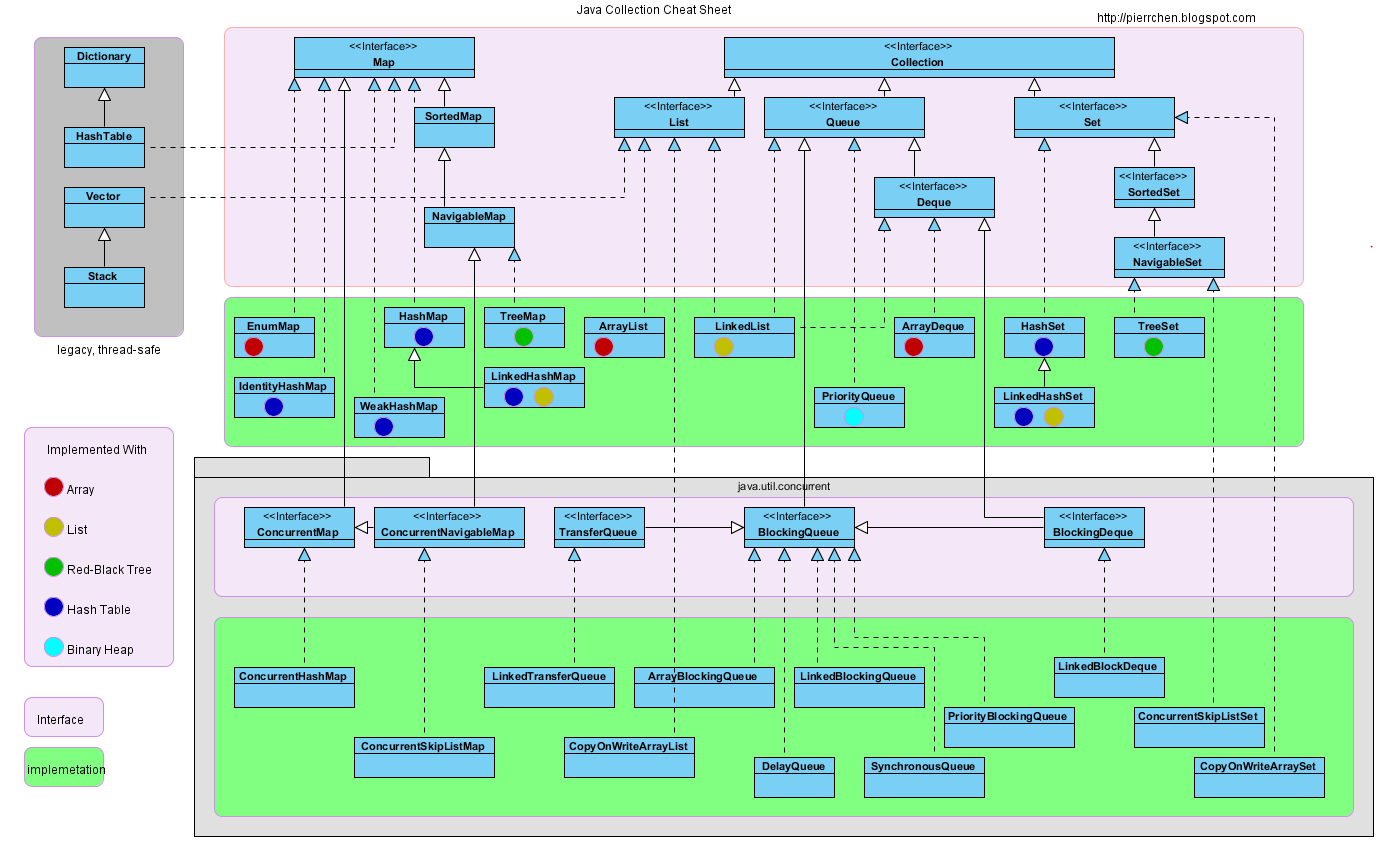
### Java Collection
|
||
|
||
|
||
#### HashMap and HashTable
|
||
|
||
- `Hashtable` is synchronized, whereas `HashMap` is not. This makes HashMap better for non-threaded applications, as unsynchronized Objects typically perform better than synchronized ones.
|
||
|
||
- `Hashtable` does not allow null keys or values. `HashMap` allows one null key and any number of null values.
|
||
|
||
- One of HashMap's subclasses is `LinkedHashMap`, so in the event that you'd want predictable iteration order (which is insertion order by default), you could easily swap out the HashMap for a LinkedHashMap. This wouldn't be as easy if you were using Hashtable.
|
||
|
||
- `HashMap` is not thread-safe, if you do want to have thread-safe one then use `Collections.synchronizedMap()`,
|
||
- HashTable is thread-safe, but is treated as legacy.
|
||
|
||
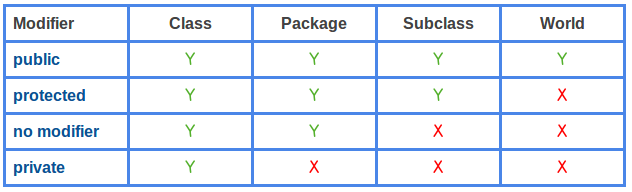
### modifier
|
||
|
||
* public
|
||
* no modifier
|
||
* protected
|
||
* priivate
|
||
|
||
### Java modifier diagram
|
||
|
||
|
||
|
||
### NIO
|
||
- Channels
|
||
- A channel is a kind of stream, from the channel data can be read into a buffer.
|
||
- channel implementations
|
||
- FileChannel
|
||
- reads data from and to files
|
||
- DatagramChannel
|
||
- read and write data over the network via UDP
|
||
- SocketChannel
|
||
- read and write data over the network visa TCP
|
||
- ServerSocketChannel
|
||
- allows you to listen for incoming TCP connections, like a web server. For each incoming connection a SocketChannel is created.
|
||
- Buffer
|
||
|
||
- code sample
|
||
```java
|
||
RandomAccessFile aFile = new RandomAccessFile("data/nio-data.txt", "rw");
|
||
FileChannel inChannel = aFile.getChannel();
|
||
|
||
//create buffer with capacity of 48 bytes
|
||
ByteBuffer buf = ByteBuffer.allocate(48);
|
||
|
||
**int bytesRead = inChannel.read(buf**); //read into buffer.
|
||
while (bytesRead != -1) {
|
||
|
||
**buf.flip**(); //make buffer ready for read
|
||
|
||
while(buf.hasRemaining()){
|
||
System.out.print((char) **buf.get**()); // read 1 byte at a time
|
||
}
|
||
|
||
**buf.clear**(); //make buffer ready for writing
|
||
bytesRead = inChannel.read(buf);
|
||
}
|
||
aFile.close();
|
||
```
|
||
- properties
|
||
- capacity
|
||
- position
|
||
- limit
|
||
|
||
- Steps for buffer to read and write data.
|
||
- write data into buffer
|
||
- call buffer.flip()
|
||
- read data out of the buffer
|
||
- call buffer.clear() or buffer.compact()
|
||
- Non-blocking IO
|
||
- Selectors
|
||
|
||
- A selector allows a single thread to handle multiple Channels
|
||
- [http://tutorials.jenkov.com/java-nio/index.html](http://tutorials.jenkov.com/java-nio/index.html)
|
||
|
||
### SSL
|
||
|
||
#### Java use TLSv1.2 by default since Java 8
|
||
|
||
When you saw some error like this `SSL handshake exception: “Algorithm constraints check failed: MD5withRSA”`, probably you used `MD5` as message digest when generate a CA. You should regenerate a new CA using `sha1`, because the `MD5` has been found to be insecure.
|
||
|
||
Some more info <https://stackoverflow.com/questions/21218217/ssl-handshake-exception-algorithm-constraints-check-failed-md5withrsa>
|
||
|
||
### Monotonic clock
|
||
|
||
`Note`: You can go to the `go` page to check out more background knowledge
|
||
|
||
```java
|
||
long startTime = System.nanoTime();
|
||
// ... the code being measured ...
|
||
long estimatedTime = System.nanoTime() - startTime;
|
||
|
||
```
|
||
|
||
Some code which uses the wall clock
|
||
|
||
```java
|
||
long start = System.currentTimeMillis();
|
||
// Do something exceptional
|
||
long elapsed = System.currentTimeMillis() - start;
|
||
```
|